
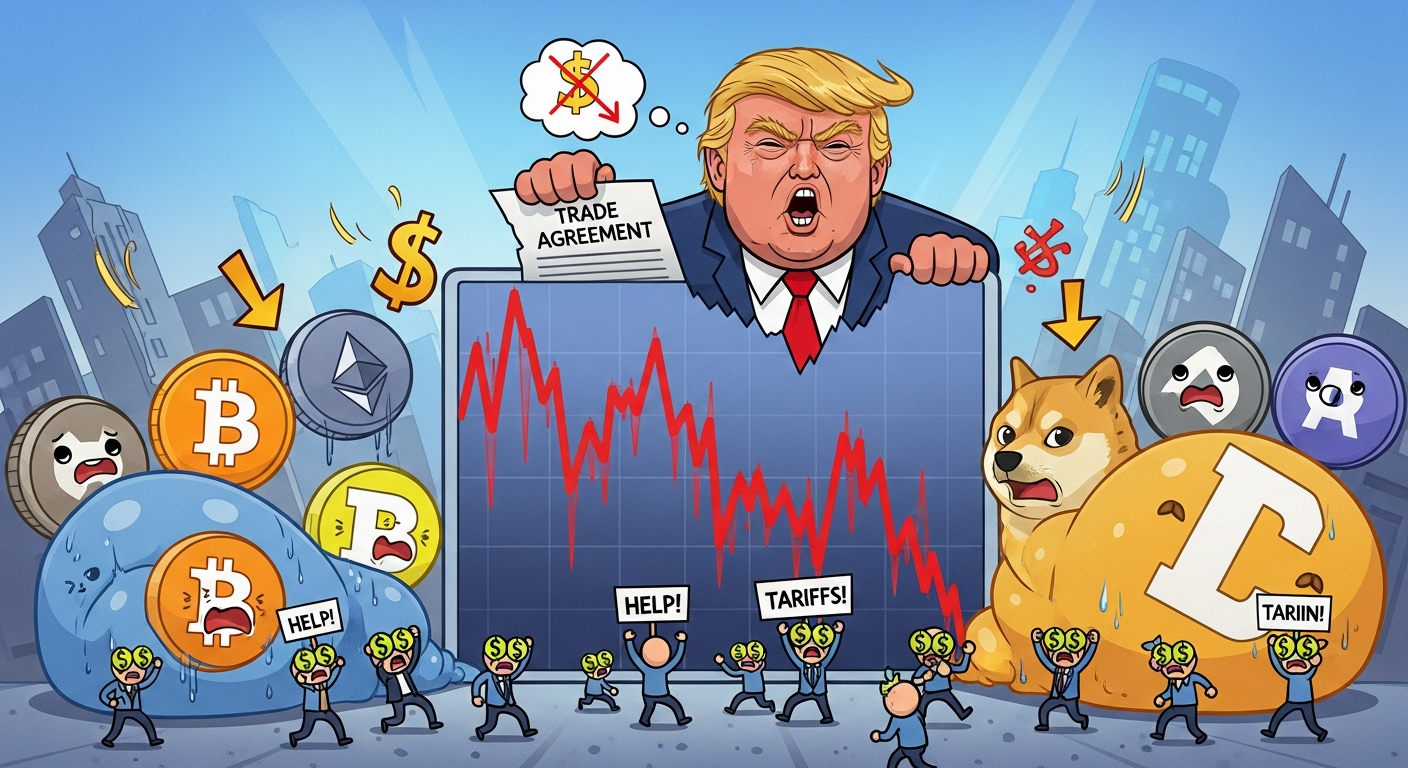
Crypto Market Crash on Renewed Trump Tariff Threats
The Crypto Market Crash extended its decline on Wednesday as renewed global trade developments weighed on investor sentiment, pushing major digital assets lower during Asian trading hours.
Bitcoin fell 6.2% to $98,450, slipping below the $100,000 psychological level for the first time since early January, according to data from CoinMarketCap. Ethereum declined 7.8% to $2,620, while major altcoins such as XRP and Solana recorded losses of more than 9% over the past 24 hours.
Broad-Based Selling Hits Digital Assets
Selling pressure intensified across the market as traders reduced exposure to risk assets following trade-related policy announcements made late Tuesday. Total cryptocurrency market capitalization dropped to $2.87 trillion, down from approximately $3.1 trillion earlier this week.
Trading activity surged alongside the price decline. Aggregate crypto trading volume increased 34%, with Binance reporting nearly $42 billion in 24-hour volume as of 08:00 UTC Wednesday, reflecting heightened market activity during the sell-off.
Trade Policy Developments Weigh on Sentiment
Market weakness followed renewed discussion of potential tariff measures affecting key trading partners, which contributed to a broader pullback across global financial markets. U.S. equity index futures also traded lower in overnight sessions, signaling reduced risk appetite among investors.
According to Bloomberg, several institutional funds trimmed exposure to digital assets amid the uncertainty, reflecting risk management behavior seen during earlier periods of trade-related market stress. Similar market reactions were observed during global trade disputes in 2018 and 2019, when cryptocurrencies showed increased sensitivity to macroeconomic headlines.
Key Technical Levels Breached
Bitcoin’s decline below $100,000 marked a notable technical break, as the level had acted as support since late December. Data from CoinGecko showed Bitcoin testing the $98,000 range multiple times within a short trading window, highlighting elevated short-term volatility.
Ethereum also faced pressure, moving below its 50-day moving average for the first time since November. Smaller-cap tokens experienced steeper losses, with several decentralized finance (DeFi) assets falling between 12% and 18% during the same period.
Read More:-Crypto Market Down Today: What’s Going On?
Correlation With Traditional Markets Increases
The cryptocurrency sell-off coincided with a strengthening U.S. dollar and weakness in stock index futures. Reuters data indicated that the correlation between Bitcoin and the S&P 500 rose to 0.72, its highest level in three months, suggesting reduced diversification benefits during risk-off conditions.
Similar correlation patterns have emerged during past macroeconomic stress events, including the March 2020 market sell-off and the 2022 Federal Reserve tightening cycle.
Market Indicators Reflect Caution
Derivatives markets also signaled growing caution. Bitcoin futures open interest declined by 8% on CME Group exchanges, while Binance Research reported negative funding rates for several perpetual contracts, indicating defensive positioning by traders.
The Crypto Fear and Greed Index fell to 32, entering “fear” territory for the first time since December.
As of Wednesday afternoon UTC, cryptocurrency markets remained under pressure, with volatility elevated as participants continued to assess the broader economic impact of ongoing trade policy developments.
Disclaimer
This article is for informational purposes only and does not constitute financial or investment advice. Cryptocurrency markets involve risk.