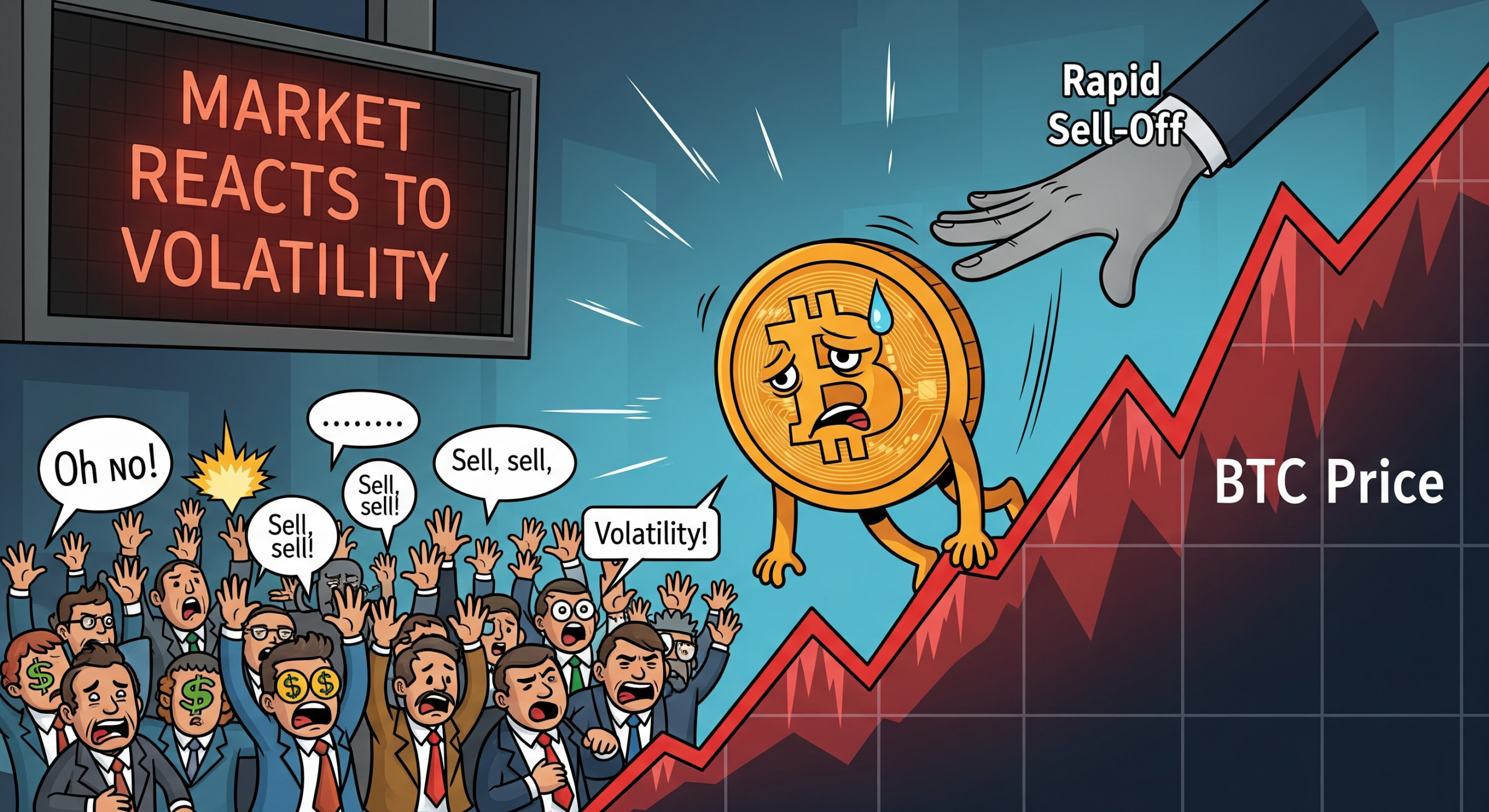
BTC Price Falls After Rapid Sell-Off, Market Reacts to Volatility
BTC suffered a sharp decline in early Monday trading, dropping below the psychological $100,000 threshold as cryptocurrency analysts and traders point to potential coordinated market manipulation behind the sudden price movement.
The world’s largest cryptocurrency by market capitalization fell approximately 8.2% within a 24-hour period, touching lows near $98,400 before recovering slightly to trade around $99,200 as of 10:00 AM EST. The abrupt selloff has reignited concerns about market integrity in the largely unregulated digital asset space.
Timing Raises Questions
The crash occurred during traditionally low-liquidity Asian trading hours, a pattern that has historically preceded suspicious market movements. Trading volume on major exchanges spiked by over 300% compared to the previous week’s average, according to data from cryptocurrency analytics platforms.
Blockchain analysis firm Chainalysis identified unusual wallet activity in the hours preceding the crash. Large Bitcoin holdings, known in the industry as “whale wallets,” executed coordinated sell orders across multiple exchanges simultaneously, creating downward pressure that triggered automated liquidations of leveraged positions.
“We observed approximately $2.3 billion worth of BTC moved to exchange wallets in the six hours before the price collapse,” said Marcus Chen, lead analyst at CryptoWatch Research. “This kind of synchronized movement is statistically rare and suggests coordinated action rather than organic market sentiment.”
BTC Liquidation Cascade Amplifies Losses
The initial selloff triggered a cascade of forced liquidations totaling nearly $1.8 billion across derivatives markets. Traders using leverage saw their positions automatically closed as Bitcoin’s price fell below key support levels, accelerating the downward momentum.
Binance, Bybit, and OKX reported the highest liquidation volumes, with long positions accounting for 87% of all forced closures. The liquidation data indicates that many retail traders were caught off-guard by the sudden price movement, suggesting the crash was not driven by broader market consensus.
Regulatory Scrutiny Intensifies
The incident has drawn attention from financial regulators in multiple jurisdictions. The U.S. Securities and Exchange Commission confirmed it is monitoring the situation, though it stopped short of announcing a formal investigation.
“We are aware of the recent volatility in cryptocurrency markets and are reviewing trading data from the period in question,” an SEC spokesperson stated in a brief email statement Monday morning.
The European Securities and Markets Authority also issued a statement reminding investors of the risks associated with unregulated digital asset markets, though it did not specifically address manipulation allegations.
Market Context and Recent Trends
Bitcoin had been trading in a relatively stable range between $102,000 and $105,000 throughout the first two weeks of January. The cryptocurrency showed resilience despite mixed macroeconomic signals, including recent Federal Reserve commentary on interest rate policy.
The sudden crash disrupts what many analysts had characterized as a maturing market showing reduced volatility compared to previous cycles. Bitcoin’s 30-day historical volatility had reached multi-year lows before Monday’s turbulence.
Altcoins followed Bitcoin’s decline, with Ethereum dropping 6.8% and other major cryptocurrencies posting similar losses. The total cryptocurrency market capitalization fell by approximately $180 billion during the selloff.
Industry Response and Skepticism
Prominent cryptocurrency figures have expressed skepticism about the organic nature of the price movement. Several analysts shared technical chart data on social media platforms highlighting the unusual trading patterns that preceded the crash.
“This wasn’t retail panic selling or response to fundamental news,” tweeted Sarah Hoffman, chief strategist at Digital Asset Management Group. “The order book data tells a clear story of deliberate price suppression.”
However, not all market observers agree with the manipulation narrative. Some analysts argue that Bitcoin remains a highly volatile asset prone to sharp corrections, particularly after extended periods of stability.
Impact on Investor Confidence
The crash has renewed discussions about the need for enhanced market surveillance and potential regulatory frameworks for cryptocurrency trading. Critics of the current system point to the lack of circuit breakers or trading halts that exist in traditional equity markets.
Retail investors, who have increasingly entered cryptocurrency markets over the past year, bore the brunt of the liquidations. Many had entered leveraged long positions expecting Bitcoin to challenge its all-time high near $108,000 reached in late December 2025.
What Happens Next
Bitcoin’s immediate price trajectory remains uncertain as traders assess whether the selloff represents a temporary manipulation event or the beginning of a broader correction. Key support levels around $95,000 will be closely watched in coming sessions.
Market participants are awaiting further analysis from blockchain forensics firms, which may provide additional evidence regarding the coordinated wallet movements that preceded the crash. Any findings could inform regulatory discussions about market manipulation in digital asset markets.
The incident underscores ongoing challenges facing cryptocurrency markets as they seek broader institutional adoption and regulatory clarity. Whether authorities will pursue enforcement actions related to potential manipulation remains to be seen. Bitcoin has since stabilized above $99,000, but trading volumes remain elevated as uncertainty persists about near-term price direction.
Disclaimer
This article is for educational purposes only and should not be considered financial advice. Trading cryptocurrencies and other financial instruments carries significant risk, and you could lose all your invested capital. Always do your own research, never invest more than you can afford to lose, and consider consulting with a licensed financial advisor before making investment decisions. Past performance of chart patterns does not guarantee future results.